Let's turn a blank Claude Code, Anthropic's AI assistant, into one that knows your team, your rules and the people you train.
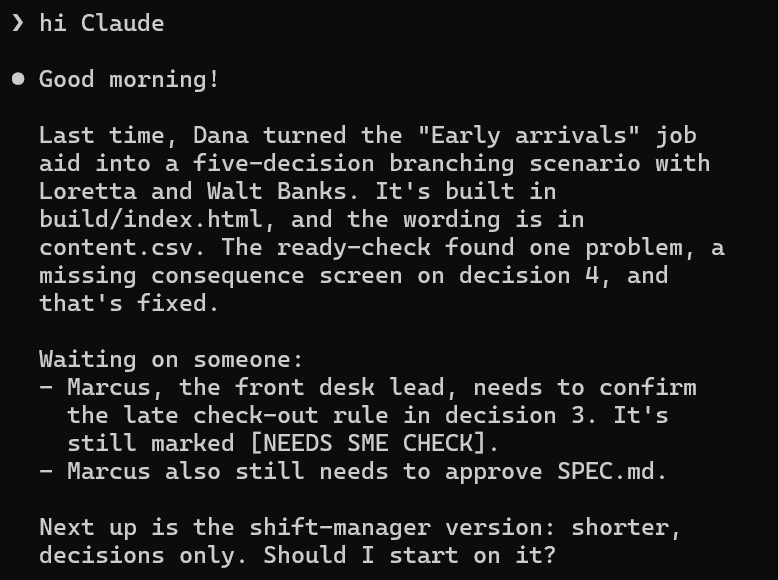
A real Claude Code session in a made-up team's starter kit. After someone types "hi Claude", Claude reads the team's handoff note and says where they left off.
It works inside your project folders. I'll set it up for your team by mid-morning on our day together, then coach everyone to use it on real work.
I'm Rachel Weiss. I build learning games and the platforms they run on with Claude Code. On a training platform I built, people have played more than 64,000 games since spring 2026.
Your team can be one person or a hundred.
Practice instead of PDFs.
Your team already writes good job aids. With Claude Code set up well, the same content can become practice, where people make the call, see what happens and learn why.
A job aid
becomes
Practice
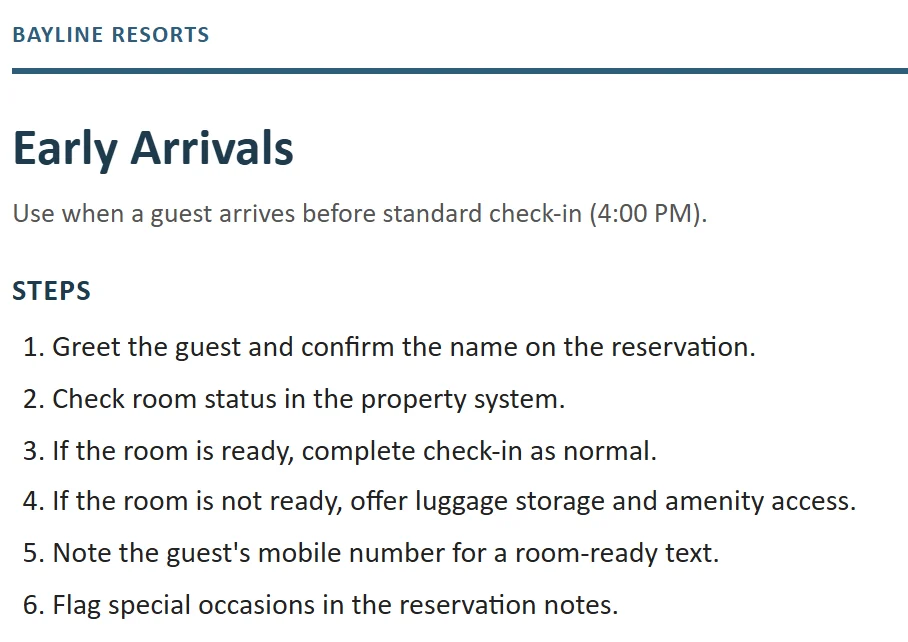
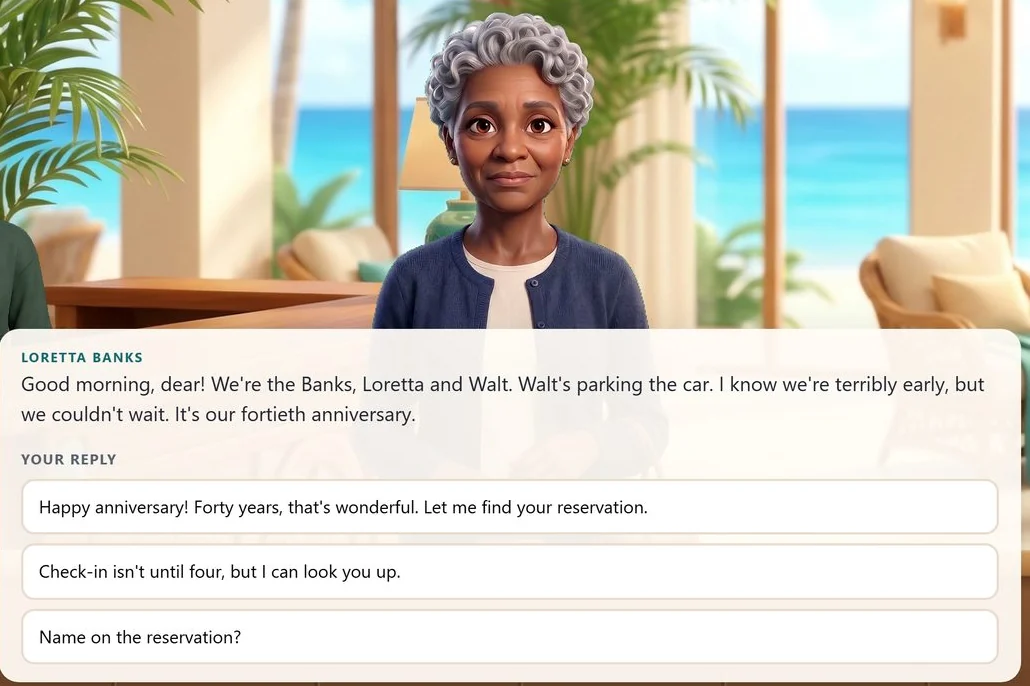
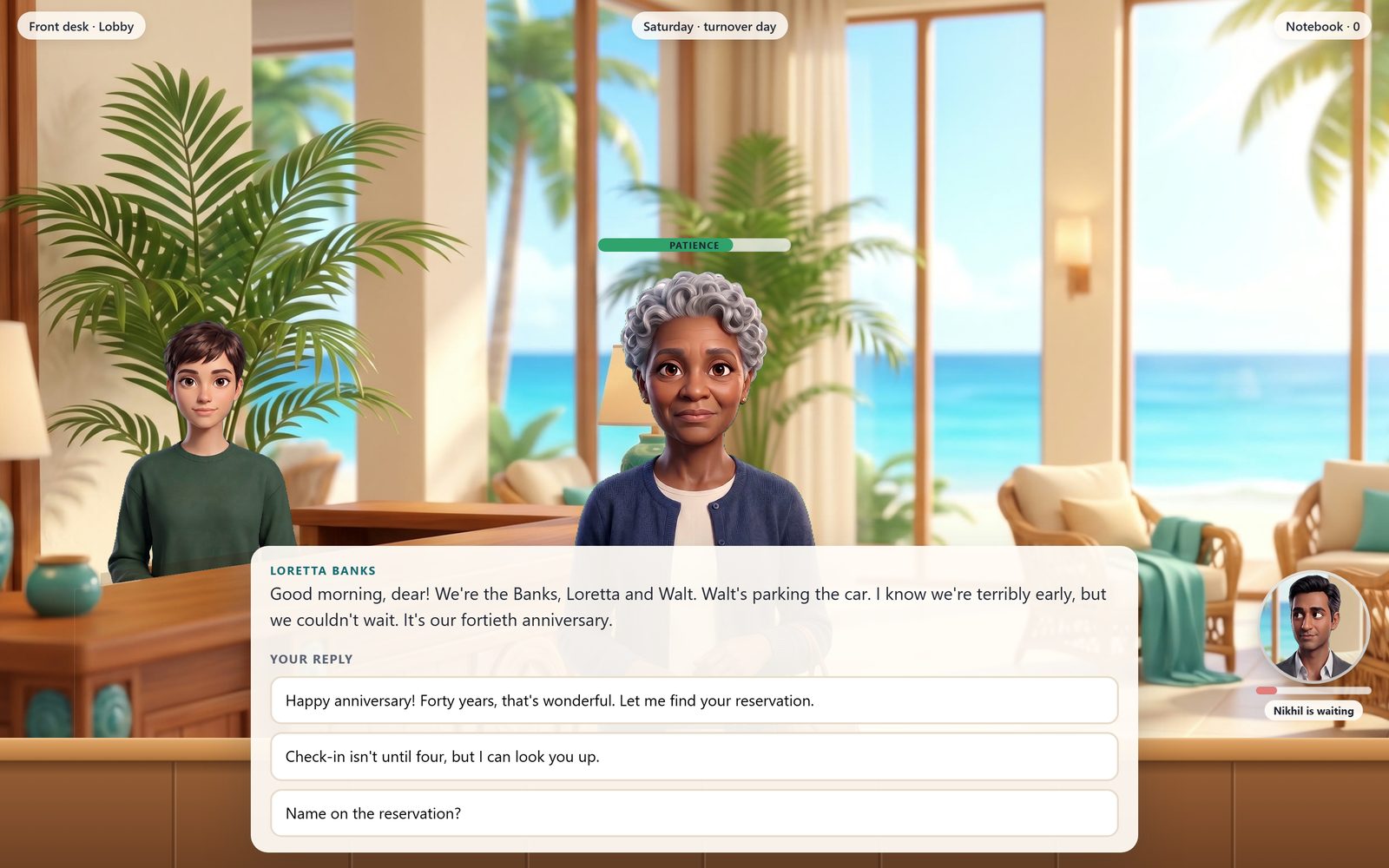
The same front desk moment, two ways. The job aid is a made-up sample, and the scenario is from First Shift, a scenario game I built. Both use a made-up company.
What will my team leave with?
Before the day ends, each person turns a weekly job into a skill, and Claude builds a page of everything the team made, for you to share with your leaders. Before we start, your team fills in a short survey. I build a starter kit from their answers. It's a folder of plain text files your team can read and edit. If your team already has Claude Code, there's nothing new to install.
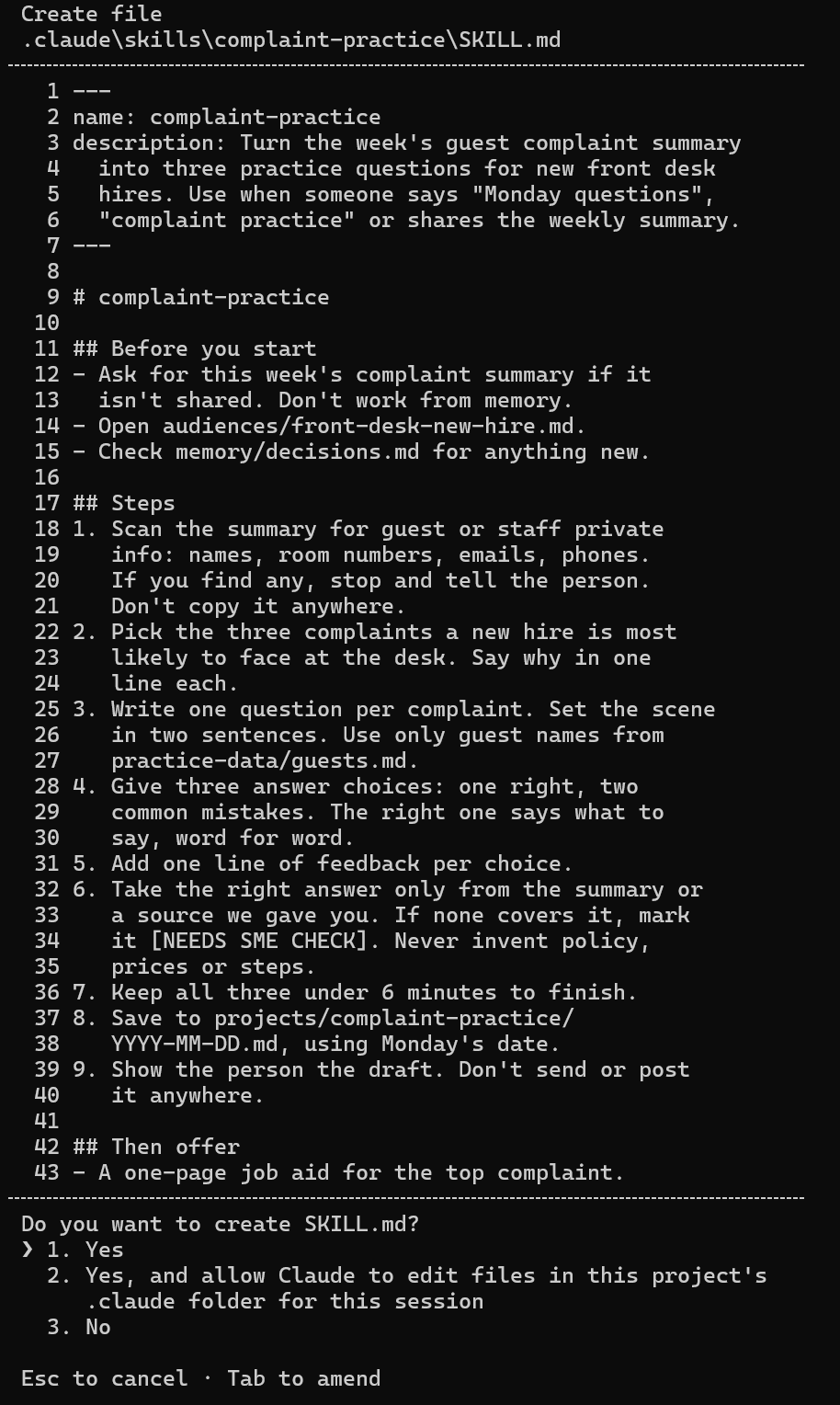
A real session: from one short request, Claude wrote this team skill and asked before saving it. It reads the audience profile, stops if it finds private details, and marks anything without a source for an expert.
A routine that remembers.
Every session starts with "hi Claude", and Claude picks up where you left off. Its handoff notes and your team's decisions live in plain files in a shared folder, so even a computer crash costs you minutes, not your place.
Guided by your team, not limited by it.
Together, we write your team's note for Claude: the hard lines, like private information and your company's rules, and room to suggest more than you'd think to ask. Before anything is shared, Claude checks it against your source and marks anything without a source for an expert. Then a teammate reviews it, and a person decides.
Skills, including your own.
A skill is a saved recipe for a job. Call it by name, and Claude works from the same steps each time. Each person turns a task they repeat every week into their own skill, and the team starts a shared library.
Practice for the people you train.
I draft short profiles of the people you train from your team's survey, and your team makes them its own. Think of a nurse with 90 seconds between patients, a new sales rep, or a manager who hates extra clicks. Then each person picks a profile and rebuilds one of their own trainings as practice for that person. It can be a branching scenario, a practice version of a workflow with made-up data, or a practice partner that gives feedback.
By the end of the day, each person has done each of these once, and your team has a one-page playbook to keep going, even with a new teammate. If you want more, we can add another round of coaching or another session together, at the same hourly rate.
How does it work?
It's priced by the hour, so you pick the pieces that fit your team. Between sessions, your team practices in Embark IQ.
A virtual kickoff
2 hours, online
For the whole team. In the first half hour, you'll watch a made-up request become a working branching scenario, and see how Claude is set up to check its own work. Then the basics: what AI does well, where it goes wrong, and the hard lines we never cross.
A hands-on day
About 7 hours, at your office or online
One full day or two half days. In the morning, we set up Claude and teach it your team: the routine, memory and skills. In the afternoon, we build the real thing: practice for the right audience, and one check before sharing.
We end with your team's playbook and a showcase page for your leaders.
One-on-one coaching
An hour each
With each person, on their own project. We tune their setup, and each person leaves with a 30-day plan.
A 30-day check-in
Included
About 30 days after the coaching, we meet as a team for a short check-in to see what's working and what you want next.
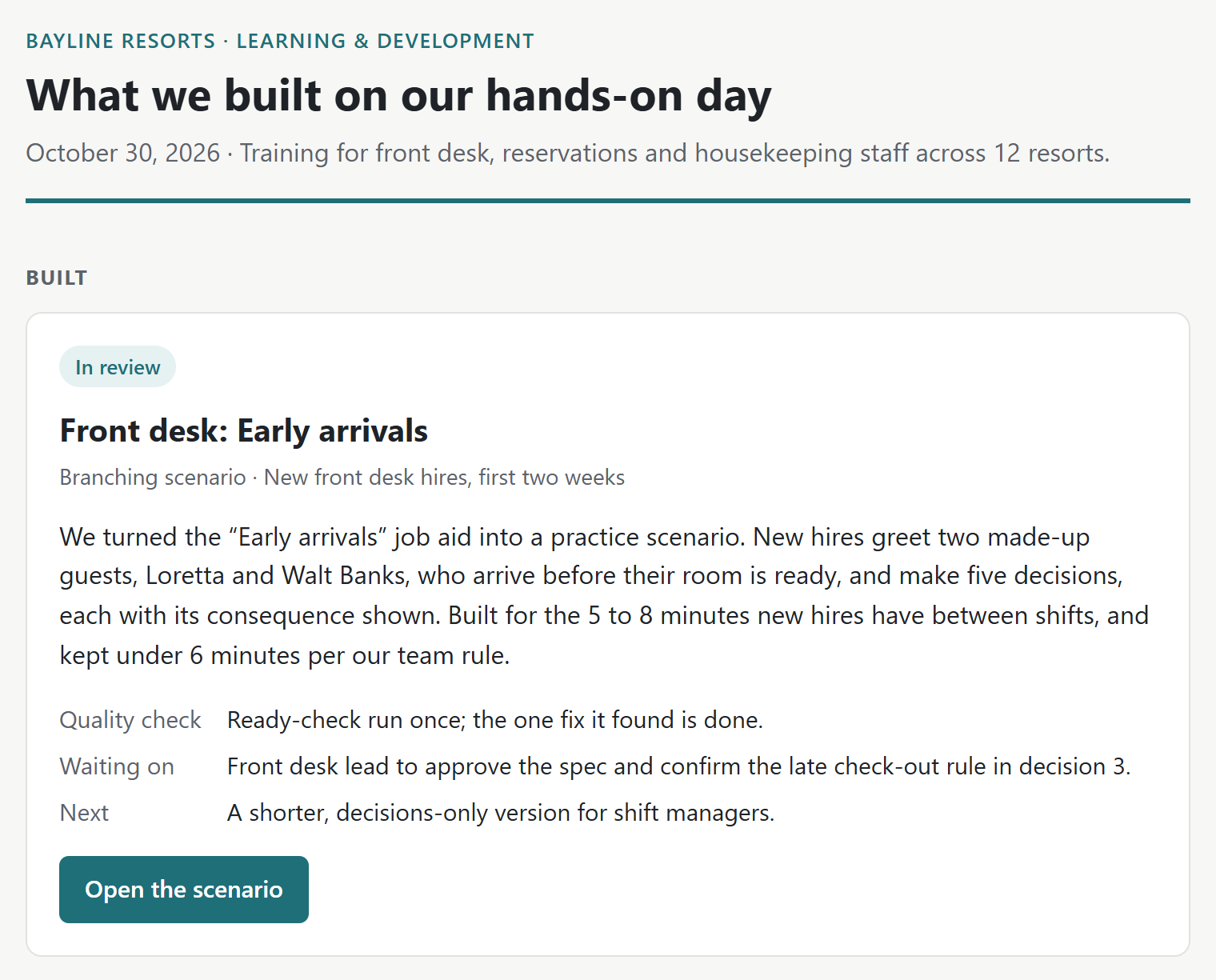
Here's a real showcase page Claude built for a made-up team.
How is it priced?
It's priced by the hour, so a team of one and a team of a hundred don't pay the same. Embark IQ comes bundled with your coaching hours. Want me at your office? We'll talk through travel on our call.
Ask about pricing for your team. Book 20 minutes. I'd be happy to talk it through. Bring a list of the AI tools your company lets you use, and one job your team does every week.
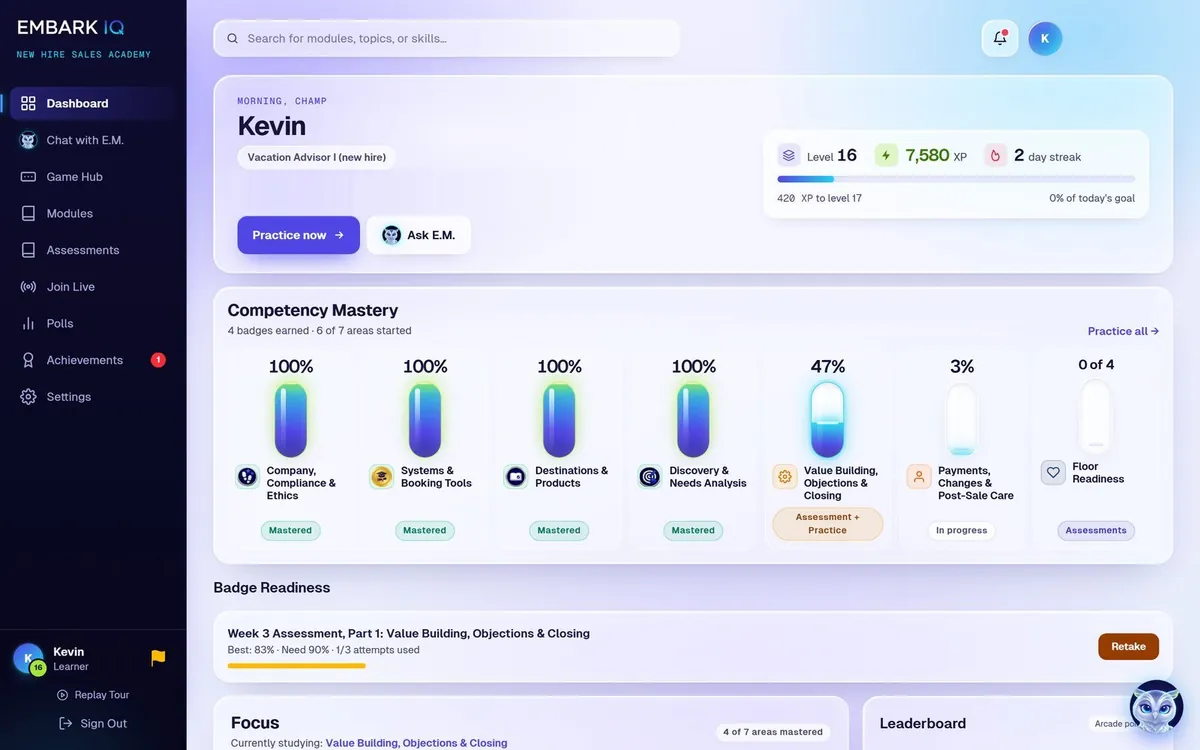
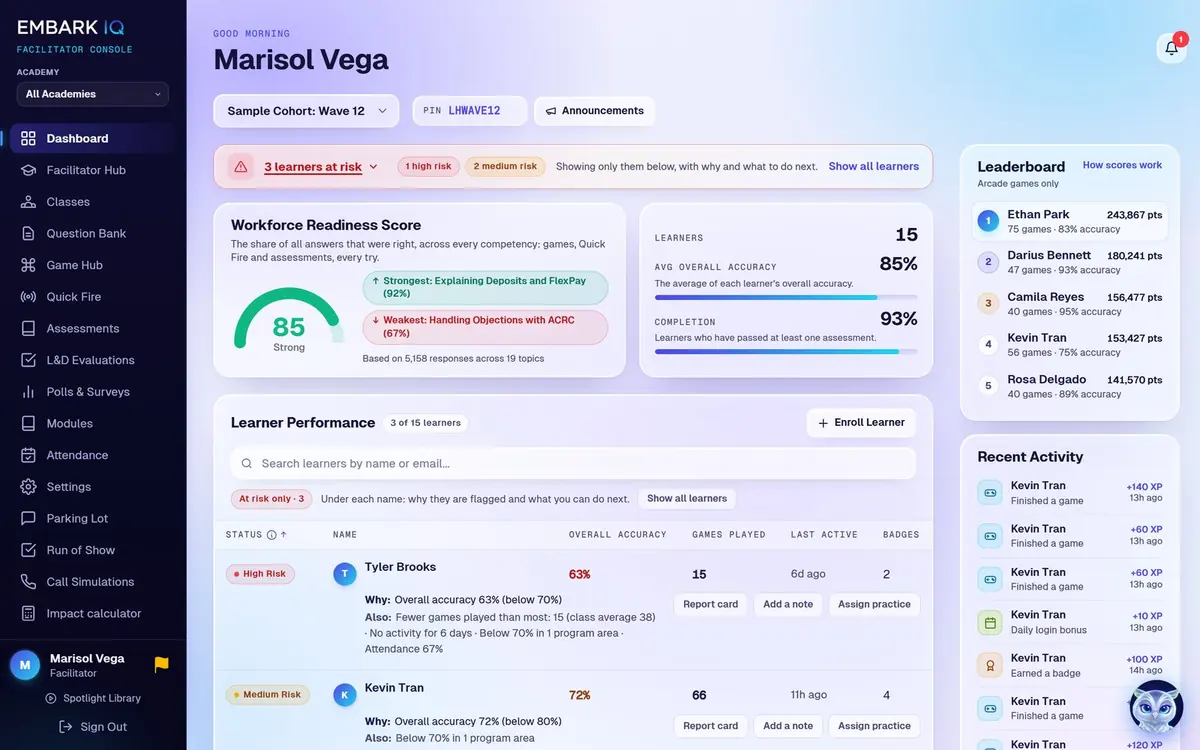
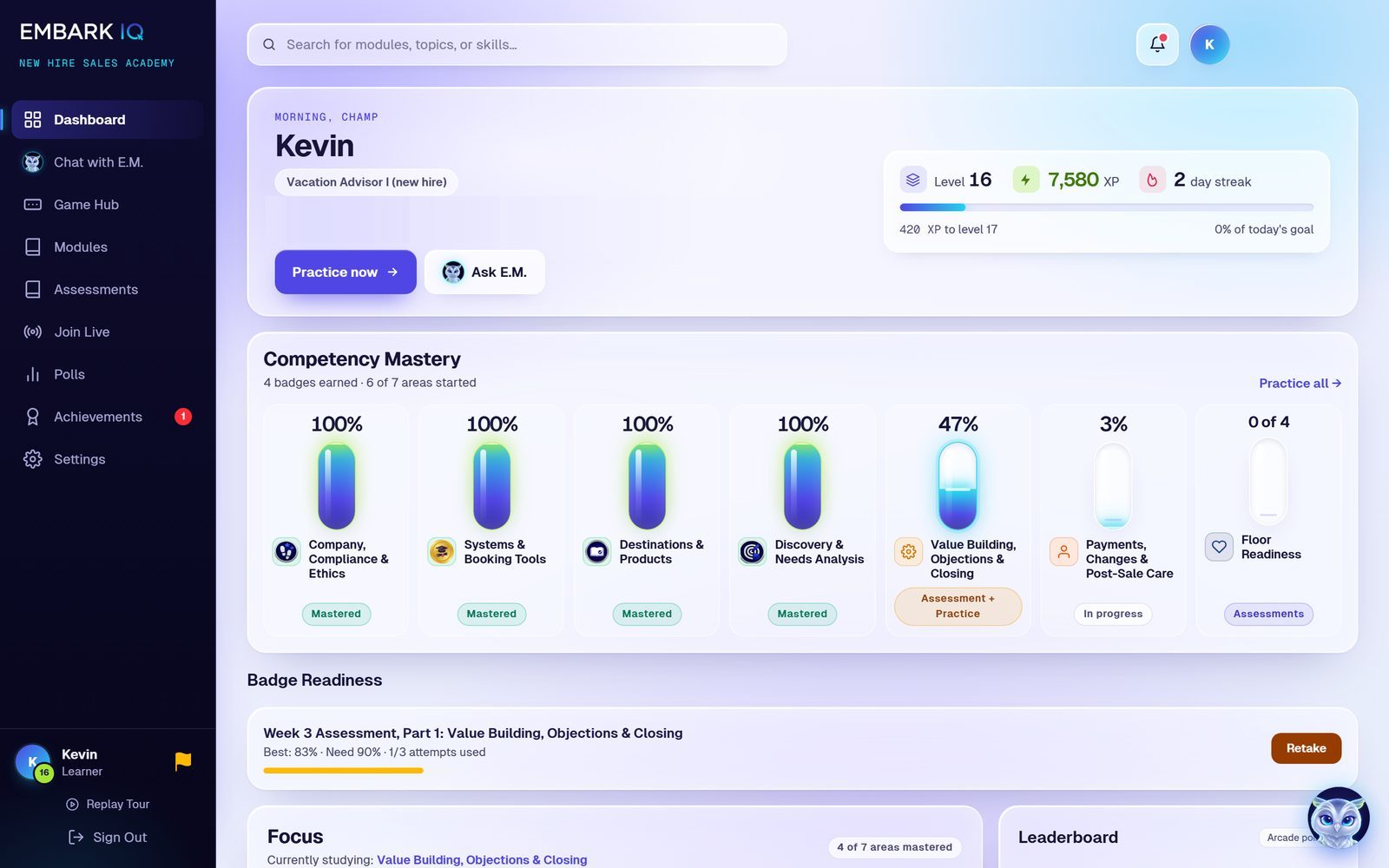
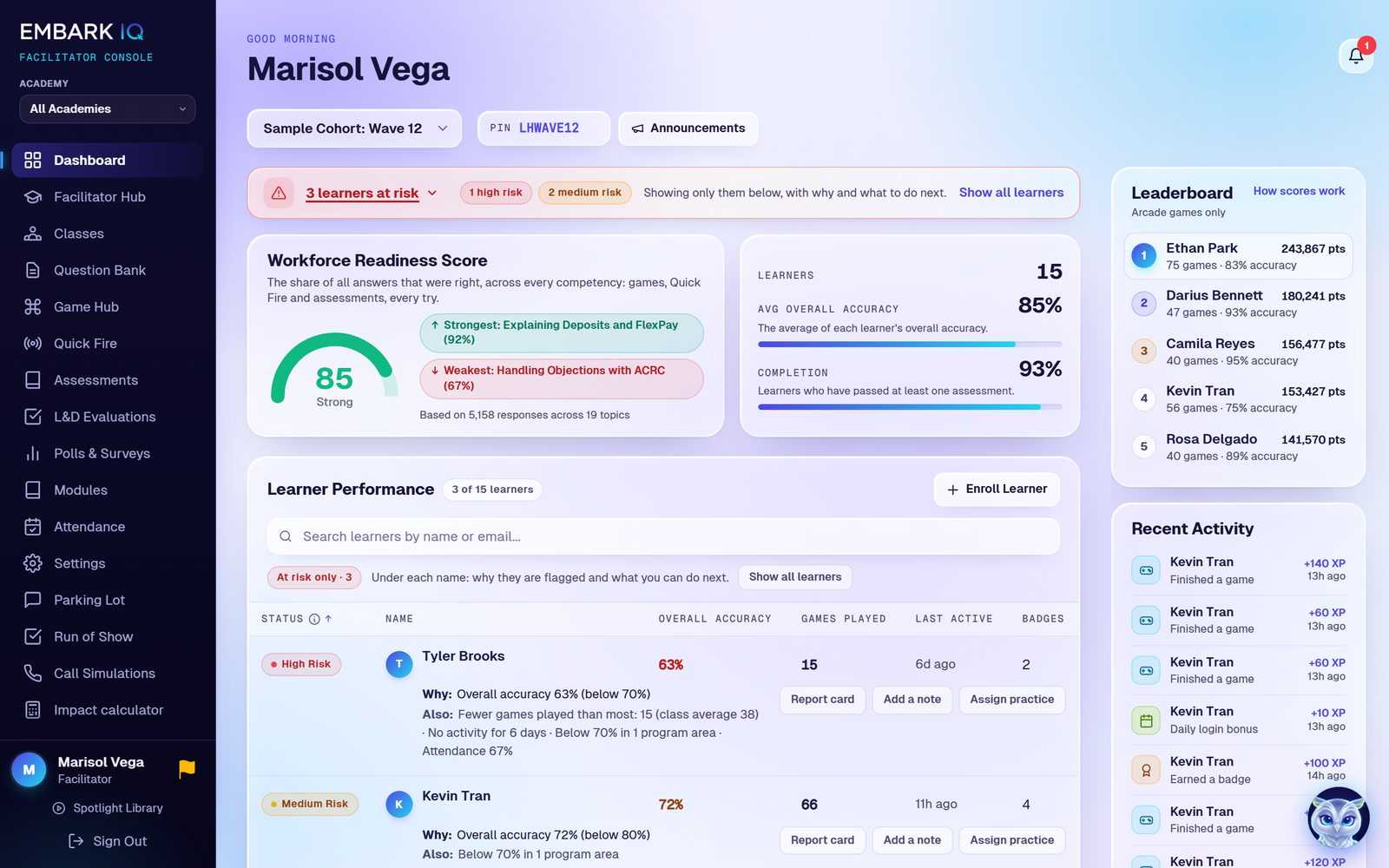
Embark IQ is my learning platform. Your team gets its own course space there, bundled with your coaching hours. They sign in on the web, take short hands-on lessons, and play games that teach the AI words. You see who's on track and who needs help.
Six short lessons follow the same plan as the coaching. Before your team starts, I fill them with examples from your team's own work:
What AI can do for your team, and the hard lines
Starting every session so Claude remembers
Teaching Claude a job once, as a skill
Who this training is for, this time
Building practice people will want to use
One check before sharing, and ready to go
In your team's space, each lesson opens once the one before it is passed. A game arcade helps people learn the new AI words, like hallucination, when AI sounds sure but is wrong. Your team keeps its space for the whole coaching period, plus 30 days.
It opens a one-click Embark IQ demo with the made-up sample company.
What your team sees: their progress and the next step.
What you see: who's on track and who needs help.
Real Embark IQ screens, shown with a made-up company's sales training. Your team's space holds your six AI lessons instead.
How do we keep private information safe?
We work only in the tools and accounts your company has approved.
No patient, customer or other private information goes into any AI tool. We use made-up examples, or real work with the private details taken out.
Your starter kit, your skills and Claude's memory are never given private information. Claude's own memory is on by default and saves notes by itself, and your company can turn it off.
Claude is told never to invent facts and to mark anything it isn't sure of. Your experts approve anything that needs an expert.
Your company's own rules for sharing files and screens come first.
Who will you work with?
I'm Rachel Weiss, founder of E.M. Designs. I'm an instructional designer, and my studio designs, builds and sells learning games and the platforms they run on. I build with AI coding agents like Claude Code, so the habits in this program are the ones I use myself.
My own platform, Embark IQ, brings lessons, live team games, an arcade and mastery tracking together. The workplace games on my site cover patient access, specialty pharmacy, call centers and new hires.
At my August workshop, a room of mostly instructional designers with no coding background changed and published a real game in one hour. I also teach instructional designers Claude Code in my Game Lab Academy.
I speak at L&D conferences, including DevLearn 2026 (Session 305), Training 2027 and ATD's SHIFT Summit.
No. We start in plain English. Claude drafts and edits the files, and your team decides what's right.
What if someone on my team is skeptical about AI?
That's welcome. We're not replacing anyone's abilities. We're optimizing them. People see where AI goes wrong before they rely on it, and your team stays the experts who decide.
What if we're only allowed Copilot?
We start with the tools your company has approved. Bring that list to our call, and I'll tell you honestly what we can do with it.
Are Claude licenses included?
No. Your team uses Claude Code through your company's own accounts. If you're not sure what you have, bring that question to our call.
How big can my team be?
Your team can be one person or a hundred. The kickoff and the hands-on day are for the whole group, and the coaching is one person at a time.
What happens after the coaching?
The starter kit, the skills and the playbook are your team's own files, so they stay with you. Your team keeps its Embark IQ space for the whole coaching period, plus 30 days. About 30 days after the coaching, we have a short check-in, and it's included. If the program sparks more, there's plenty further to explore, like a team of Claudes working on several jobs side by side.
Is this the same as Game Lab Academy?
No. Game Lab Academy is a six-week course for one person who wants to build their own learning game with Claude. This is for your team, using AI and Claude Code in its everyday work.