Founding Cohort · Fall 2026

Build an eLearning game with Claude Code.

A six-week, beginner-friendly live build academy for instructional designers who want to go beyond prompting and create real, playable learning games with AI. You do not need to know how to code. You will learn enough about how games work to direct Claude, make smart decisions, troubleshoot what goes wrong, and keep building after the Academy ends.

Sep 22Start
Tuesdays7:00 to 8:30 PM ET
6 WeeksLive + hands-on
10 SeatsFounding cohort
$500 for the full six weeks Ten seats only. Starts September 22, Tuesdays 7:00 to 8:30 PM ET.

Want to try it first? Tuesday, September 8

I am running the game-building workshop again, free, on Tuesday September 8 at 7:00 PM ET — the same 90 minutes that got complete beginners to a working, published game. Come to that, see how I teach, and decide about the Academy afterwards. Email me and I will send you the link.

The experience

Learn by building, every week.

This is not six weeks of watching me talk about Claude Code. Every Tuesday, we build. You start with working game architecture, take it apart to see how it runs, and gradually turn it into your own eLearning game — learning Claude Code, Phaser, game mechanics, sprites, animation, debugging, and learning design as you need them during the build.

90 minEach live session
6Build nights
1Playable game you publish

Who it is for

You are a good fit if you are ready to build.

You are a good fit if

You are new to Claude Code, you have experimented with vibe coding and want more structure, or you want to use AI to build useful tools without needing a traditional coding background.

Your project can be

A playable eLearning game, built on the Game Lab side-scroller and shaped around your own audience, topic and learning objective. You do not need to arrive with a fully formed idea — you will never be staring at a blank screen wondering what to build.

The outcome

By the end of six weeks you will have a playable eLearning game you have built, tested and published, plus the Phaser and Claude Code literacy to keep building the next one on your own.

What you will be able to do

  • Use Claude Code confidently inside a real game project.
  • Understand the important parts of a Phaser game without becoming a programmer.
  • Customise a supported game architecture around your own learning problem.
  • Work with players, environments, sprites, animation, interactions and game mechanics.
  • Design gameplay that carries a real learning objective instead of quizzes pasted on top.
  • Troubleshoot and improve AI-generated game code instead of starting over when it breaks.
  • Publish a playable eLearning game you can send someone.

Your build framework

EMMA keeps the work moving.

You will use the same four-part framework every week, from your first change on night one to publishing your finished game.

E Explore

Understand the project, files, user, constraints, and what already exists.

M Model

Plan the experience and define what good looks like before larger changes.

M Modify

Build, test, revise, and improve in deliberate increments.

A Actualize

Finish, validate, deploy, document, and make the work reusable.

A typical 90-minute session

20Learn
20Build together
40Build + coaching
10Share + next move

Between sessions: expect one focused build challenge, usually 30 to 60 minutes, that moves your own project forward and prepares you for the next week.

What you will build

One architecture. Your game.

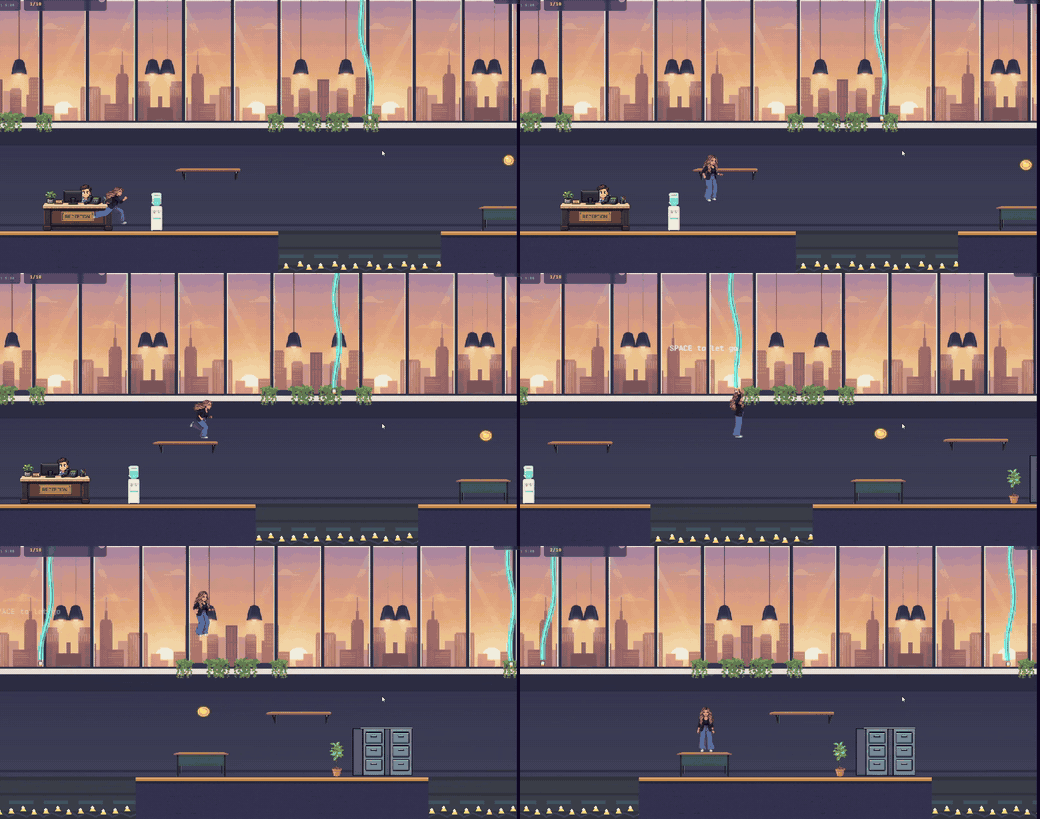
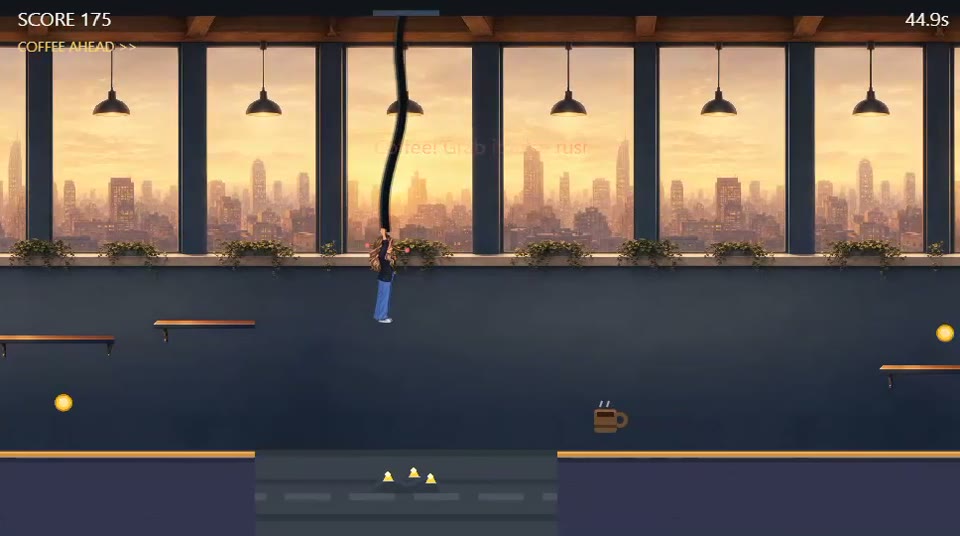
The founding cohort goes deep on a single game architecture: the side-scroller behind Cubicle Run. You will learn how it actually works, then turn it into an original learning game built around your own audience and content. Ten finished games, no two alike.

What you start from

A working side-scroller: the player moves through an environment, avoids obstacles, collects things, meets learning content and works toward a goal. It runs on night one, before you have changed anything.

What you decide

The audience, the topic, the characters, the environment, the obstacles, the collectibles, the learning problem, the feedback, the scoring and the win condition. Everything a learner would notice is yours.

Why only one

Because it makes every Tuesday better. When we build collision, everyone is building collision. When somebody gets stuck, the fix usually helps half the room. Depth on one architecture beats a tour of three.

The six weeks

Build from night one. Finish with a game you can send someone.

01
Claude CodeSetup

Get into the game

Start building on night one.

LearnSet up Claude Code, open and run a real Phaser game, understand the basic project structure, and start making changes immediately. You will begin learning how to explore a project with Claude, ask for controlled changes, test what comes back, and recover when something does not work.
BuildRun the game, change it, add something, and leave with a playable version you modified yourself.
Leave withA working development setup and your first Claude Code game build.
02
DirectionPlanning

Make it yours

Turn the starter into your game.

LearnChoose your game direction, then define the audience, learning problem, game goal, environment, player and core interaction while you keep building. You will learn how to use Claude to plan changes without getting stuck in planning mode.
BuildStart changing the world, player, goal, content and first interactions.
Leave withA playable game that has started becoming your own.
03
PhaserMechanics

Build the gameplay

Make the game actually work.

LearnLearn the Phaser concepts you need while building: players, scenes, movement, interactions, collision, game state, scoring, goals, and the other mechanics your game needs. Not a lecture on Phaser — the night your game starts working.
BuildExpand the playable experience and create the core loop your learner will repeat.
Leave withA working gameplay prototype.
04
SpritesAnimation

Bring it to life

Make it look and feel like a real game.

LearnWork with game assets, characters, sprites, sprite sheets, frames and animation, backgrounds, objects, interface elements, and AI-assisted visual workflows — including how to tell an asset problem from a code problem.
BuildReplace placeholders, animate the experience, and develop the visual identity of your game.
Leave withA game that looks like your project rather than a starter template.
05
Learning designMechanics

Make it teach

Connect the gameplay to the learning.

LearnHow questions, decisions, feedback, consequences, scoring, progress, difficulty and accessibility can live inside the game instead of feeling pasted on top of it. This is the week that separates an eLearning game from a web game with training content in it.
BuildAdd or strengthen the learning experience inside your existing gameplay.
Leave withAn eLearning game where the mechanics and the learning work together.
06
DebuggingShip

Fix it. Ship it. Show it.

Get the game out of your folder and into the world.

LearnPractical debugging and QA workflows with Claude, testing the finished experience, final improvements, and publishing. We will also look at how to preserve what you built so your first game becomes the starting point for the next one.
BuildDebug, polish, test and publish.
Leave withA playable eLearning game you can share, plus the foundation to build another.

How each week works

Each Tuesday has a build milestone, but you are not locked to the pace of the group. If you want to work ahead, you can. If you need more time, use the recording and keep building. Every week has a Core Build that keeps you on track to finish your game, plus optional Level Up challenges when you want to take the project further.

Founding cohort: this is the first Game Lab Academy cohort. The six weekly build milestones are set. Specific examples, optional challenges, resources and demonstrations will evolve as we build together and I see what the cohort needs. That is part of why it is limited to ten people.

What you leave with

A game, plus the system behind it.

  • A playable eLearning game you published
  • Your Game Lab starter architecture
  • Phaser literacy for directing Claude
  • Sprite and animation workflow
  • EMMA build framework
  • Game planning and learning-mechanic templates
  • Debugging and QA workflow with Claude
  • Publishing and handoff checklist

This has already happened once

Twenty-two people built a game with me on a Sunday.

22 In the room, live
90 Minutes, start to playable
1 Working game each

On Sunday, August 23, twenty-two instructional designers opened Claude Code with me and spent ninety minutes building Deadline Run — a playable office platformer that teaches people to spot a phishing email. Sixty-six had registered. The session was hosted by Women Who Build.

The whole ninety minutes is public, unedited. You can watch exactly how I teach before you decide anything about six weeks of it.

That Sunday was ninety minutes and one game, built alongside everyone else in the room. The Academy is six weeks and your game — your subject, your mechanic, your art — plus the architecture to build the next one without me.

Founding cohort tuition

Reserve your seat.

$500 for the full six-week academy Founding cohort · 10 seats
Enrollment closes Friday, September 18
Pay in full, $500 Reserve my seat Two payments of $250 $250 now

On the two-payment option you pay $250 today and I invoice you for the second $250, due Tuesday September 29. Nothing is charged to your card automatically, and there is no third payment.

Come to week one first

Sit through the first session. If it is not what you wanted, email me before the second one and I will refund everything you have paid. No form to fill in, no reason to give.

Secure checkout by Stripe. Card details go straight to Stripe and are never stored by E.M. Designs.

Before you decide

The questions people actually ask.

I’m not technical. Is this really for me?

Yes, and it is who the cohort is built for. You are not writing code. You are describing what you want, looking at what comes back, and saying what is wrong with it. If you write learning objectives or give feedback on drafts, that is already the skill. In the free workshop, people who had never opened Claude Code had a published, working game inside an hour.

What if I don’t have a project idea yet?

You do not need one. You start from the shared side-scroller and pick a learning problem in Week 2, and you build on a working starter, so you are never staring at an empty folder. Bring a topic you care about if you have one — the game is much more useful pointed at real training you already need.

How is this different from the free workshop?

The workshop was deliberately on rails. The project, the artwork, the choices and the framework were all handed to you, so you could feel the workflow without making every decision at once. The Academy starts from a blank folder and your own idea, which is a genuinely different problem: planning it, making the assets, directing Claude through it, testing it, and shipping it.

What if I pay and it turns out not to be for me?

Come to the first session and find out before you are committed. If it is not what you wanted, email me any time before week two and I will refund everything you have paid. This is the founding cohort, so you are taking a chance on something with no past students to ask about. The refund is how I carry that risk instead of you.

Why only ten seats?

Because from week three onward it is mostly me looking at what each person is building and unsticking them. That does not work with forty people. Ten is a working limit, not a marketing one.

Schedule

Six Tuesday evenings.

Week 1September 22, 20267:00 to 8:30 PM ET
Week 2September 29, 20267:00 to 8:30 PM ET
Week 3October 6, 20267:00 to 8:30 PM ET
Week 4October 13, 20267:00 to 8:30 PM ET
Week 5October 20, 20267:00 to 8:30 PM ET
Week 6October 27, 20267:00 to 8:30 PM ET

Build something useful. Understand how it works. Reuse what you learned.

Reserve your seat, $500