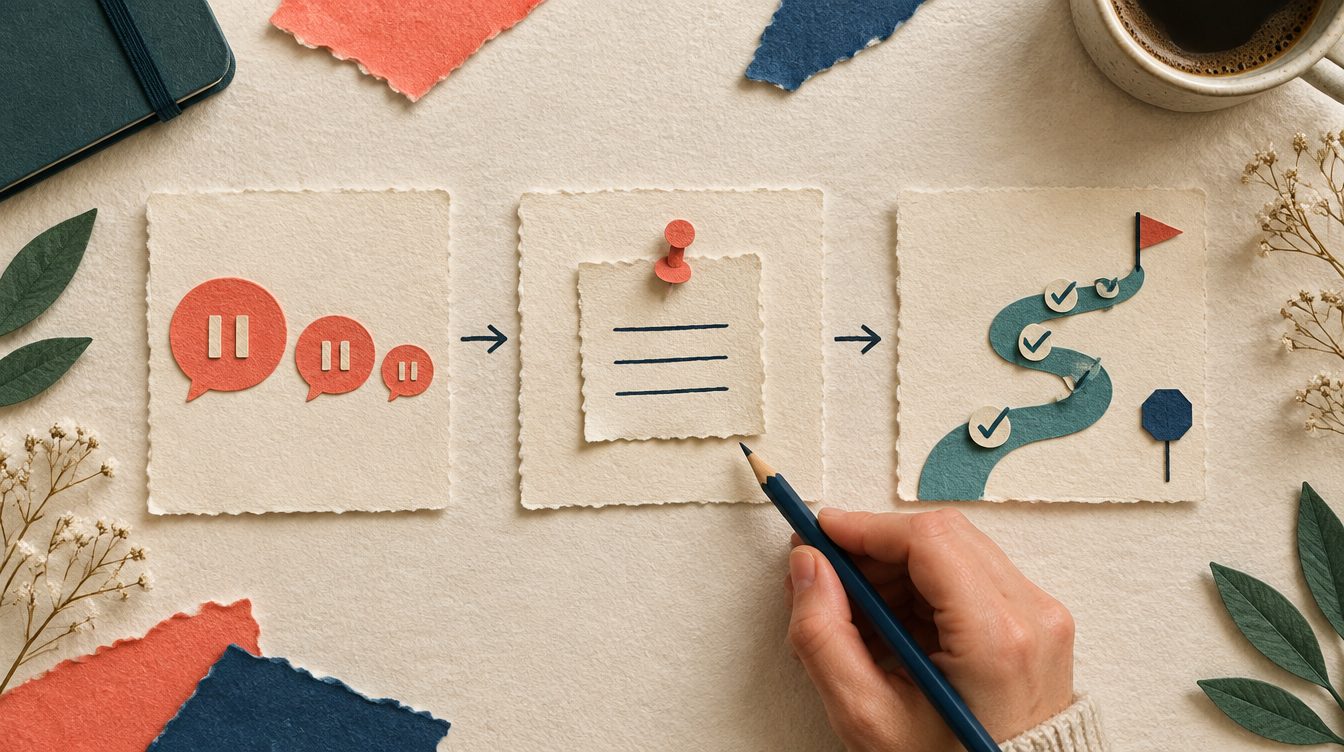
You give Claude a job.
It does one step.
Then it stops.
"Should I continue?"
You type yes.
It does one more step.
"Would you like me to keep going?"
Yes.
I counted mine for one week.
I typed "yes", "continue" or something like it 51 times.
That is not me building.
That is me babysitting.
Why does it keep stopping?
Because it is trying to be careful.
Claude does not know which of your steps are small and which are risky.
So it checks in on all of them.
That sounds polite.
It is also slow.
And if you walk away for coffee, nothing gets done while you're gone.
What is the fix?
You tell it the rule once.
Anthropic, the company that makes Claude, published a guide for its newest model, Opus 5.5, on September 22, 2026.
It includes a line to put in your CLAUDE.md file.
A CLAUDE.md file is Claude's notes about your project.
It reads that file every time it starts.
So a rule in there sticks.
Here is the full line, from Anthropic's guide:
When a step doesn't need my input, keep going. Put status notes in the same message as your next action. Stop and ask only when you can't continue without me, or before anything destructive: deleting data, force-pushing, or changing anything outside this repository.
A repository is your project folder.
You do not have to open the file yourself.
Tell Claude:
Add this to my CLAUDE.md.
It will.
What should it still ask about?
This part matters more than the line itself.
"Keep going" does NOT mean "do anything."
Anthropic's guide says the same: fewer stops, but you still check anything risky or hard to undo.
So add your own "still ask me" list.
Mine says Claude still stops before:
- spending money
- deleting or overwriting a file I care about
- sending, posting or publishing anything
- touching anything outside this project folder
Everything else, it decides and tells me what it picked.
Before you try this, two safety steps
1. Work in a copy.
Before you let it run on its own, make a copy of your project folder.
Or ask Claude to save a checkpoint with Git first.
Claude Code can undo its own file edits. Type /rewind.
But it cannot undo everything.
It can't take back changes made by commands it ran.
And it can't unsend an email or unpublish a page.
A copy can.
2. Keep the permission prompts on.
This line changes when Claude checks in with you.
It does NOT replace the safety prompts that ask before risky commands.
Leave those on. Don't switch on a mode that skips them, like bypass permissions.
And never try this on work files, shared drives or anything with private information until you've tested it on a practice project.
What changed when I did this?
It stopped asking about file names.
It stopped asking which button color I liked.
It started finishing whole steps and telling me what it chose in one line.
And when it did stop, it was for something I actually needed to decide.
That is the whole point.
Fewer questions.
Better questions.
Try this today
- Make a copy of a practice project, not a work project.
- Open Claude in the copy. Paste the line above and say "Add this to my CLAUDE.md."
- Add your "still ask me" list: money, deleting or overwriting, sending or publishing, anything outside this folder.
- Give it a job with three or four steps and walk away for five minutes.
- Come back and check what it changed. If it is waiting on a permission prompt, that is the safety step working.
Then count how many times it stopped.
In Game Lab Academy, the starter kits already work this way. Claude makes the small, undoable choices itself. It stops for money, accounts, your own files, and for you to play what it built.
Stop saying yes.
Give it the rule.
Sources
- Anthropic, "Getting the most out of Claude Opus 5.5," September 22, 2026 (claude.dev/blog/getting-the-most-out-of-opus-5-5): the CLAUDE.md line, and keeping your own check and the permission prompts for anything risky.
- Claude Code docs, "Checkpointing" (code.claude.com/docs/en/checkpointing): /rewind undoes Claude's file edits, but not changes made by commands it runs.
Want This Capability on Your L&D Team?
I can build your game from your source material, run a Build Day with your team, or you can start free with my tools.
See how we'd work together Try the tools free